a divisive debate
AI is seen by some as "Satan" or the end of art. More than just a technological controversy, it's a questioning of what constitutes the value of a work. For many, the judgment falls on the tool rather than the result. But despite my background as an illustrator and photographer, I see it as a logical extension of our creative arsenal.
Transforming the process to return to the essentials. Because, after all, it’s the intent that counts. Neither the time spent, nor the "suffering" or technical difficulty should be the sole benchmarks of quality. It is that initial spark, the creator's clear vision, that gives meaning to the content, regardless of the machine executing it. AI is not a threat; it’s a new way to put conscious design at the forefront. Even if the rupture is brutal: AI's evolution is so rapid and exponential that it makes the technological challenges of the past seem almost trivial.
The Myth of suffering:
The original psychological block
The idea that AI is "too easy" to be legitimate. More than a technical critique, it's the return of the old debate over the value of effort. This concept immediately reminded me of my time in Art History class. Many students preferred Dali or Magritte over Reinhardt or Pollock simply because Dali/Magritte's works seemed more complex, more "difficult" to produce than abstraction.
It’s this same vision that guides today’s "anti-AI" crowd. They reproach prompters for not having endured years of technical "suffering" in learning traditional methods. Turning merit into a question of time spent rather than vision. Yet, they forget the determining factor: intent. Regardless of the complexity of execution or the effort exerted, it is the creator's initial will that defines the work, not the sweat on their brow.
The artistic intent:
The Breath Behind the Work
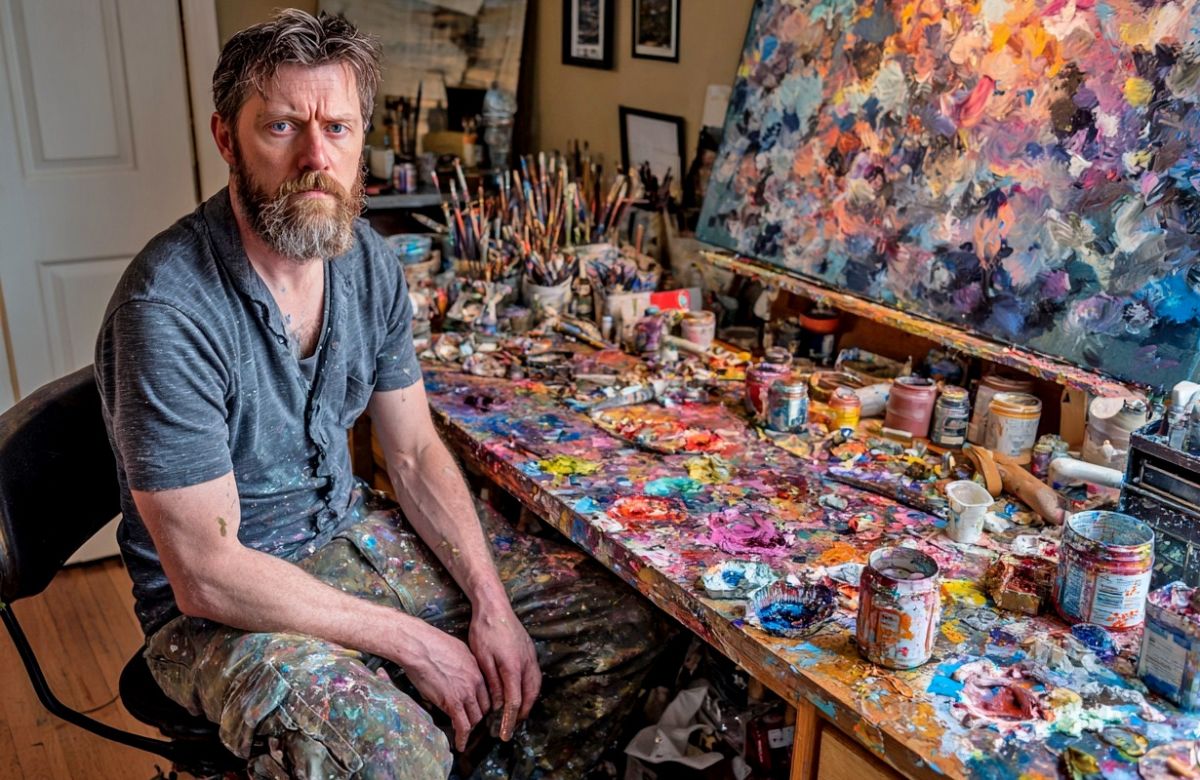
I’m talking about conscious design—the driving force that guides an artist's hand. More than just an idea, it’s the project’s compass. Transforming an abstract impulse into a series of coherent technical or aesthetic choices. It’s this initial desire that gives meaning to the final form, whether to communicate an emotion, defend a worldview, or provoke reflection.
This notion of intent is completely ignored by "anti-AI" activists who focus solely on the tool used and not on the visual value of the resulting images.
THE ACCEPTANCE AND SPREAD OF AI DIDN'T COME FROM NOWHERE
Precedent 1 : Digital Retouching
From image salvage to pure creation
As early as the 1990s, we spoke of post-production mastery: the ability to transform reality after the click. More than a simple fix, Photoshop was the pivot of a new profitability. On one hand, the safety of being able to recover errors from the shoot (exposure, framing, distracting details). On the other, the power to build entire universes without leaving the studio.
This evolution broke physical constraints. Transforming a work session into an infinite source of visuals without requiring massive travel costs or bloated staff. This technical agility granted the power to create high-end images with light logistics. This was a revolution that enraged a whole generation of photographers. More than a technical debate, it was a war of "purists" against progress. Many clung to the "no retouching" label, as if refusing the tools of one’s time was the only proof of being a "real artist." Nonsense.
But the market reality was elsewhere: clients didn't care about the process. Whether the image required three days of shooting with five assistants or half a day of post-production, only the final result matters. It was about transforming logistical constraints into digital efficiency. Today, the debate is closed: those who resisted had to adapt, integrating retouching as a natural extension of the camera body to stay in the race.
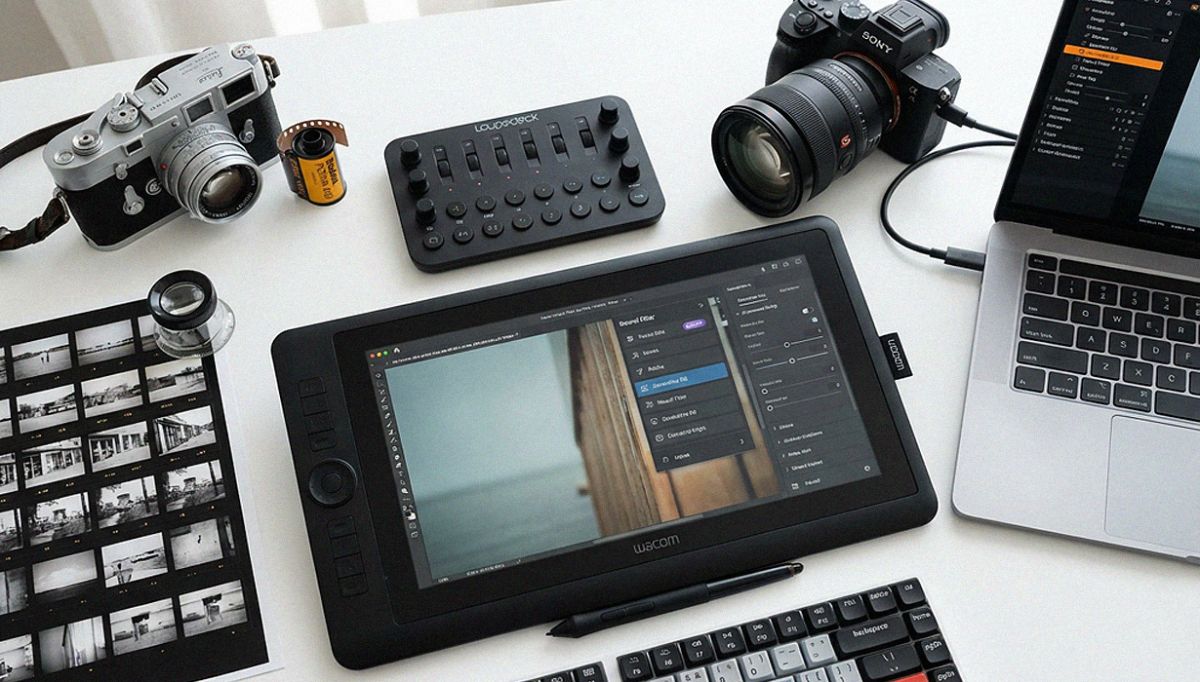
Precedent 2 : Digital Photography
From the film process to pixel arrangement
The technological shift that redefined the photographer's trade: the progressive replacement of analog by digital. More than an evolution of tools, it was an explosion of possibilities. The major stake? A drastic drop in production costs. No more film, chemical baths, or high-def scans, make way for immaterial storage and the infinite reuse of images. This mutation broke barriers to entry, opening the market to a massive audience.
Transforming a once costly and technical art into a universal and instantaneous language. This new accessibility allowed everyone to capture the world, while forcing professionals to reinvent themselves to stand out in this constant flow of images.
From the late 90s/early 2000s, I saw many friends and acquaintances "become" photographers. For the vast majority, their photography was highly successful. Thanks to this new accessibility, talent was revealed. These people already had "the eye," the sensitivity, and the drive. Technological evolution simply opened the door. I was happy to see so many acquaintances possessed these artistic sensibilities.
There, too, a few grumpy photographers protested against the "poor quality" of early digital cameras, and especially against the emergence of potential "business thieves." They’ve since gotten over it.
THEY PAVED THE WAY FOR AI
Co-responsible 1 : Image Banks
From visual uniformity to the AI rupture
The exhaustion of a model: the emergence of image banks where everything ended up looking the same. More than simple visual fatigue, it was a total standardization of corporate aesthetics. Smooth, interchangeable clichés that emptied communication of its singularity. These soul-less, globally distributed images prepared the ground for aesthetic uniformity, both for the photographers and the illustrators involved.
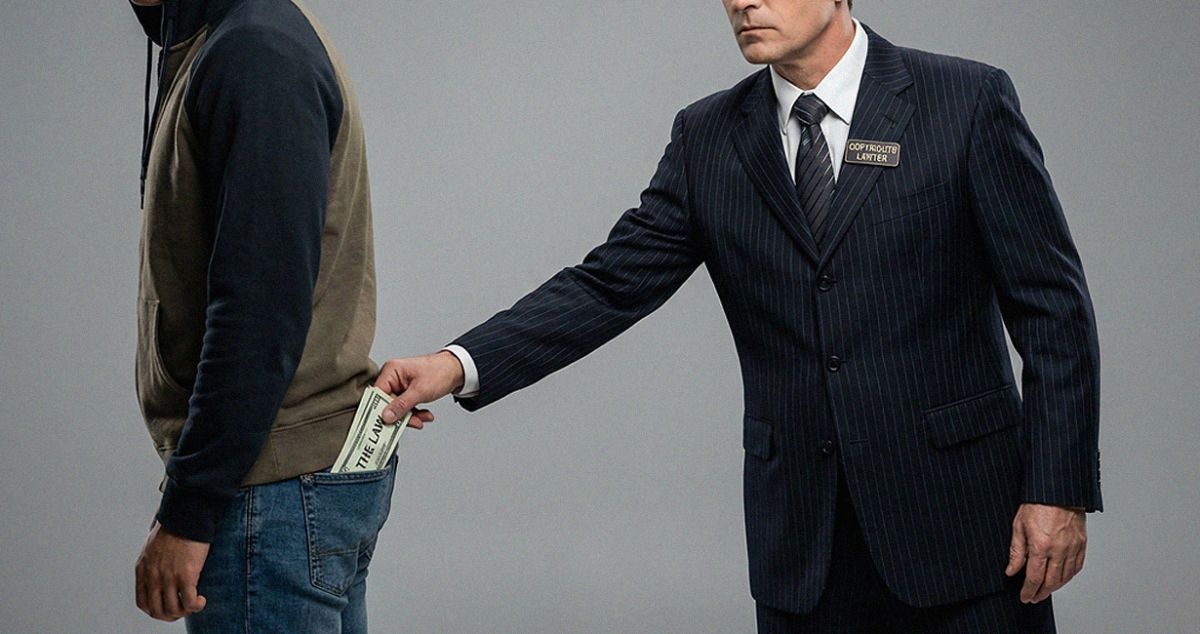
Co-responsible 2 : The agressive behaviour of Law Firms
Threats and blackmail through lawsuits
Specializing in "hunting" potential fraudsters, these firms turned the use of a simple image into a permanent legal risk. This contributed greatly to the immediate and massive adoption of AI-generated images. Constant pressure, coupled with pre-existing visual repetition, pushed creatives and their clients toward AI. This transformed multiple legal and financial constraints into total freedom.
The desire to regain originality without the threat of disproportionate copyright fees is what definitively opened the era of the prompt.
Co-responsible 3 : Global sound and sound banks
From rectification to automation: the industrialization of our ears...
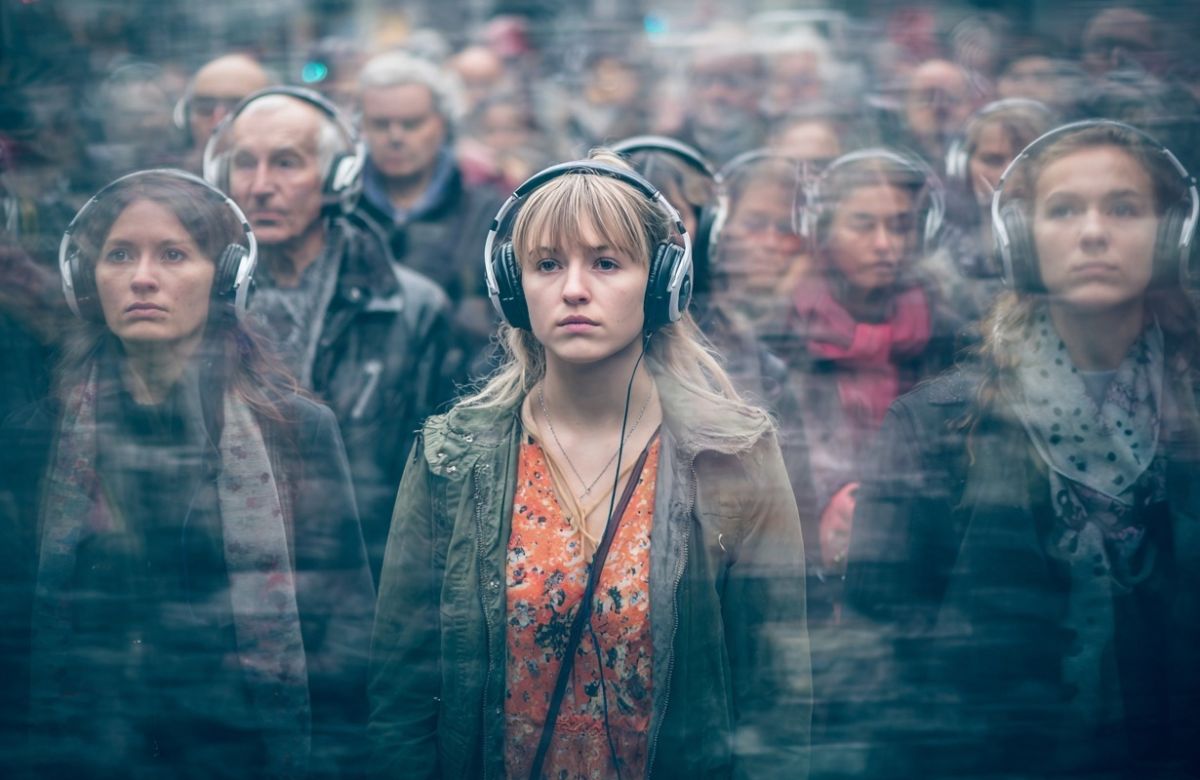
The arrival of Auto-Tune changed the game in the studio. More than an effect, it’s the tool that allows one to sing less accurately and fix everything afterward. A technical feat that slowly accustomed us to artificial perfection, unknowingly preparing us to soon consume music entirely generated by AI.
The engine of this mutation? A certain standardization of mainstream music, driven by profit-seeking producers rather than musicians seeking to express their souls. Transforming art into a product calibrated for the airwaves. This quest for immediate profitability smoothed out the edges, creating a unique sonic mold where human performance fades behind the algorithm.
CONCLUSION
We are talking about the end of a cycle and the beginning of an era where technical barriers vanish before the power of the concept. Whether one is an illustrator, photographer, musician or prompter, the tool will never be responsible for the quality of a work. Today, my choice is made: to experiment rather than endure, to understand rather than condemn. AI is a brutal rupture, certainly, but it forces us back to the essentials: what we have to say to the world. Intent remains the last bastion of our creative humanity. Let’s not let the fear of the tool mask the freedom of choice that still belongs to us.
Who am I? (and where do I speak from?)
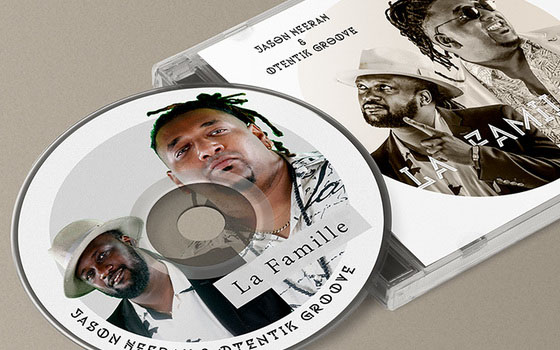
Originally, I am a comic book artist. I collaborated with Franquin (as a student-assistant when I was 20), then published in Tintin magazine and Fluide Glacial (1980s). I later created illustrations for record covers and simultaneously worked as a concert photographer for about 15 years, with worldwide publications. Finally, I became a graphic designer and studio photographer creating commercial visuals and posters for theater and one-man shows. In short, a so-called "potential victim" of generative AI.
The true challenge for the modern artist is perhaps to use this AI "driving force" not as an end, but as a new raw material to be transformed, so the final choice remains the fruit of a coherent human vision. Today I am 62, and I have no desire to be left behind or pass for an old-timer crying over the past like some of my colleagues. I try, I experiment, I test, and I aim to adapt and contribute to this debate constructively.